




Technological Innovation and IT Exports: The Role in Pakistan's Economic Growth
Introduction
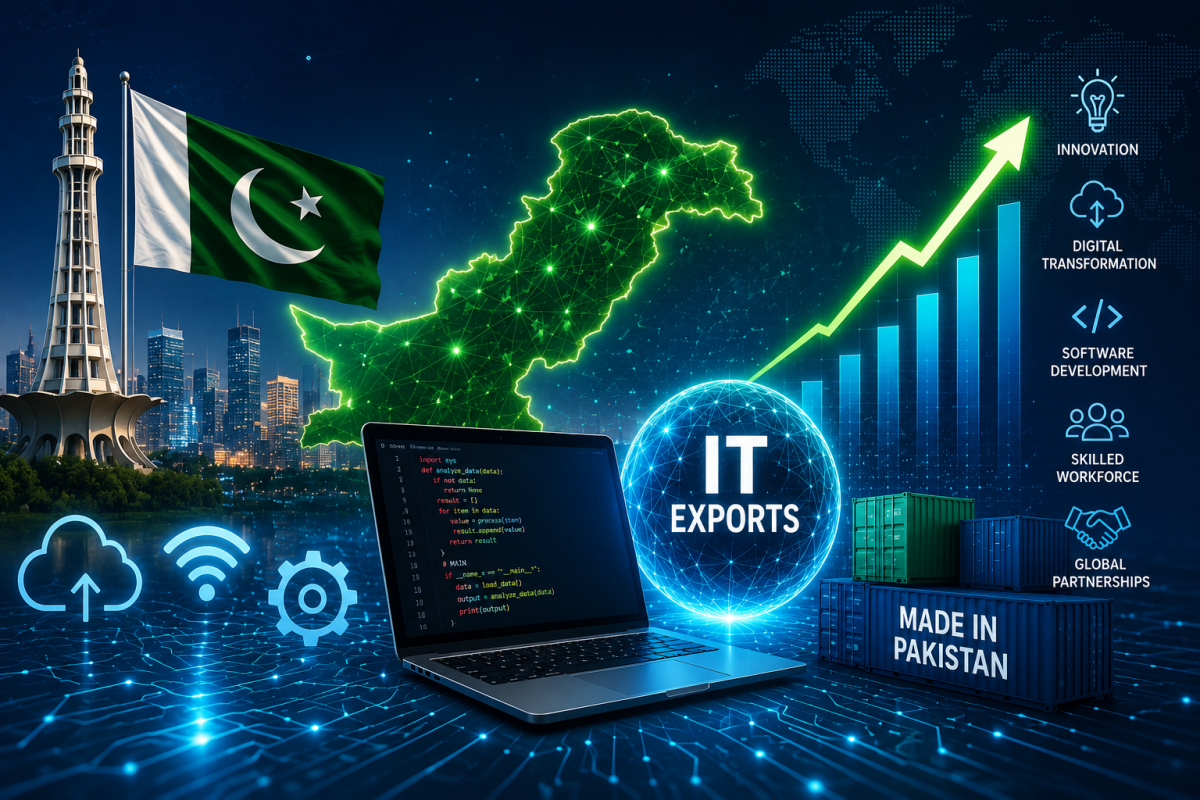
Technological innovation has become one of the most important drivers of economic growth in the 21st century. Nations that invest in research and development (R&D), digital technologies, innovation, and skilled human capital achieve higher productivity, stronger exports, and improved living standards. For Pakistan, technological innovation has emerged as a strategic tool for economic transformation. The rapid expansion of the Information Technology (IT) sector, software development, digital entrepreneurship, freelancing, artificial intelligence (AI), and IT-enabled services (ITeS) has created new opportunities for employment, exports, and foreign investment.
Pakistan has one of the world's youngest populations, providing a large pool of talented professionals in software engineering, data science, cybersecurity, cloud computing, and digital marketing. With increasing internet penetration, government support for digitalization, and growing international demand for technology services, the country is well positioned to become a regional technology hub.
Understanding Technological Innovation
Technological innovation refers to the development and application of new technologies, products, and processes that improve efficiency, productivity, and competitiveness. Innovation helps businesses produce better goods and services while reducing costs and increasing profitability.
Major technological innovations include:
- Artificial Intelligence (AI)
- Machine Learning
- Cloud Computing
- Internet of Things (IoT)
- Blockchain Technology
- Robotics and Automation
- Big Data Analytics
- Cybersecurity
- Mobile Applications
- Digital Payment Systems
These technologies are transforming industries such as healthcare, education, banking, manufacturing, agriculture, transportation, and public administration.
Growth of Pakistan's IT Industry
Pakistan's IT industry has experienced remarkable growth during the last decade. Thousands of software houses, startups, freelancers, and technology companies now provide services to clients across North America, Europe, the Middle East, Asia, and Australia.
The sector includes:
- Software Development
- Mobile App Development
- Web Development
- Artificial Intelligence Solutions
- Cloud Services
- Business Process Outsourcing (BPO)
- Cybersecurity
- Digital Marketing
- Data Analytics
- Gaming and Animation
The expansion of technology parks, startup incubators, Special Technology Zones, and digital entrepreneurship programs has strengthened Pakistan's technology ecosystem.
Pakistan’s IT Exports
Pakistan's IT sector achieved its strongest performance in fiscal year 2025–26.
- Pakistan's ICT and IT exports reached a record US$4.6 billion in FY2025–26, representing approximately 21% growth over FY2024–25. This is the highest annual export earnings ever recorded by Pakistan's technology sector.
- During June 2026, Pakistan recorded US$416 million in monthly ICT exports, a 23% increase compared with June 2025.
- Pakistan's ICT sector generated a trade surplus of approximately US$3.9 billion in FY2025–26, reflecting the industry's strong contribution to the country's foreign exchange earnings.
- During the first 11 months of FY2025–26, IT exports exceeded US$4.2 billion, already surpassing the entire export value of the previous fiscal year. Freelancers also contributed significantly to export earnings through international digital platforms.
- In FY2024–25, Pakistan's IT and IT-enabled services exports reached approximately US$3.8 billion, compared with US$3.2 billion in FY2023–24, representing nearly 19% annual growth.
These figures demonstrate that information technology has become one of Pakistan's fastest-growing export industries.
Importance of IT Exports
IT exports refer to software, digital services, consulting, outsourcing, and technology solutions sold to overseas clients.
Major IT export services include:
- Software Engineering
- Mobile Applications
- Artificial Intelligence
- Cybersecurity
- Cloud Computing
- Business Process Outsourcing
- Digital Marketing
- Web Development
- Data Analytics
- Gaming and Animation
Unlike traditional exports, IT exports require relatively limited physical infrastructure while generating high value through knowledge and innovation.
Contribution to Pakistan's Economic Growth
1. Foreign Exchange Earnings
IT exports generate billions of dollars in foreign exchange each year. Higher export earnings strengthen Pakistan's balance of payments, improve foreign exchange reserves, and reduce dependence on traditional export sectors.
2. Employment Generation
The IT industry creates employment opportunities for:
- Software Engineers
- Programmers
- Data Scientists
- Cybersecurity Experts
- Graphic Designers
- Digital Marketers
- Cloud Engineers
- AI Specialists
- Technical Support Professionals
Freelancing has also become a major source of employment for Pakistani youth, enabling professionals to work remotely for international clients.
3. Entrepreneurship and Startups
Technological innovation has encouraged entrepreneurship across Pakistan.
Young entrepreneurs are launching startups in:
- FinTech
- HealthTech
- EdTech
- AgriTech
- E-commerce
- Artificial Intelligence
- Logistics Technology
Technology incubators, accelerators, and venture capital funding continue to support startup development.
4. Productivity Improvement
Technology increases productivity across every major sector.
Agriculture
Smart irrigation, precision farming, drones, satellite monitoring, and agricultural mobile applications improve crop yields and reduce costs.
Manufacturing
Automation, robotics, artificial intelligence, and digital supply chains increase industrial efficiency and product quality.
Healthcare
Telemedicine, electronic health records, AI-assisted diagnosis, and digital health systems improve healthcare accessibility.
Education
Online learning platforms, virtual classrooms, and digital libraries provide educational opportunities nationwide.
Challenges Facing Pakistan's Technology Sector
Despite impressive progress, Pakistan still faces several challenges.
Limited Research and Development
Investment in scientific research and technological innovation remains below that of many emerging technology economies.
Skills Gap
The growing demand for AI, cybersecurity, blockchain, and cloud computing professionals requires continuous technical training.
Infrastructure
Reliable electricity, high-speed broadband, and modern digital infrastructure remain essential for future growth.
Access to Finance
Many technology startups struggle to obtain venture capital and business financing during their early stages.
Cybersecurity
Growing digitalization increases cybersecurity risks, making investment in digital security increasingly important.
Government Initiatives
The Government of Pakistan has launched several initiatives to strengthen the digital economy.
These include:
- Digital Pakistan initiatives
- Expansion of broadband connectivity
- Special Technology Zones
- Startup support programs
- Digital payment systems
- IT skills development programs
- E-government services
- Export promotion policies
These initiatives aim to improve Pakistan's competitiveness in international technology markets.
Future Opportunities
Pakistan has significant growth potential in:
- Artificial Intelligence (AI)
- Machine Learning
- Blockchain
- Cloud Computing
- Internet of Things (IoT)
- Green Technology
- Robotics
- Data Science
- FinTech
- Software-as-a-Service (SaaS)
Global demand for digital services continues to expand, creating new opportunities for Pakistani companies.
Recommendations
To maximize the contribution of technological innovation and IT exports, Pakistan should:
- Increase investment in research and development.
- Expand broadband internet access nationwide.
- Strengthen STEM education and technical training.
- Encourage university-industry collaboration.
- Support startups through tax incentives and venture capital.
- Improve digital infrastructure.
- Strengthen cybersecurity capabilities.
- Promote women's participation in the technology sector.
- Protect intellectual property rights.
- Expand access to international technology markets.
Conclusion
Technological innovation has become one of the strongest drivers of Pakistan's economic growth. The rapid expansion of software development, artificial intelligence, cloud computing, freelancing, digital entrepreneurship, and IT-enabled services has strengthened exports, generated employment, and improved Pakistan's international competitiveness.
The latest figures highlight this progress. Pakistan's ICT exports reached a historic US$4.6 billion in FY2025–26, recording 21% annual growth, while monthly ICT exports climbed to US$416 million in June 2026. The sector also generated an estimated US$3.9 billion trade surplus, demonstrating its importance as a source of foreign exchange.
With continued investment in education, innovation, digital infrastructure, and supportive public policies, Pakistan can further expand its technology exports and become a leading digital economy in South Asia. Strengthening technological innovation will not only improve export performance but also create sustainable employment, attract investment, and support long-term economic development.

Mr. Obaid Ayub is a skilled professional with specialization in Finance and Operations. Demonstrating a proven track record, He possess a unique combination of skills tailored for the dynamic realms of finance, real estate, and marketing. He has successfully optimized business processes and implemented strategic financial initiatives, showcasing his ability to deliver tangible results. His expertise lies in developing and executing robust financial strategies aligned with organizational objectives, ensuring sustainable growth and profitability. He possess significant expertise in budgeting, forecasting, and financial analysis, contributing to the facilitation of well-informed decision-making.
Obaid Ayub
Director Operations House Of Elaan