



Pakistan's Role in Regional Connectivity: From CPEC to Central Asia
Introduction
In the contemporary world, regional connectivity has become one of the most important factors determining economic growth, political stability, and international cooperation. Countries are increasingly focusing on developing transport networks, trade corridors, energy pipelines, railways, and communication systems to strengthen their economic relationships and gain access to international markets. In this context, Pakistan holds a strategically significant position because of its geographical location at the crossroads of South Asia, Central Asia, China, and the Middle East.
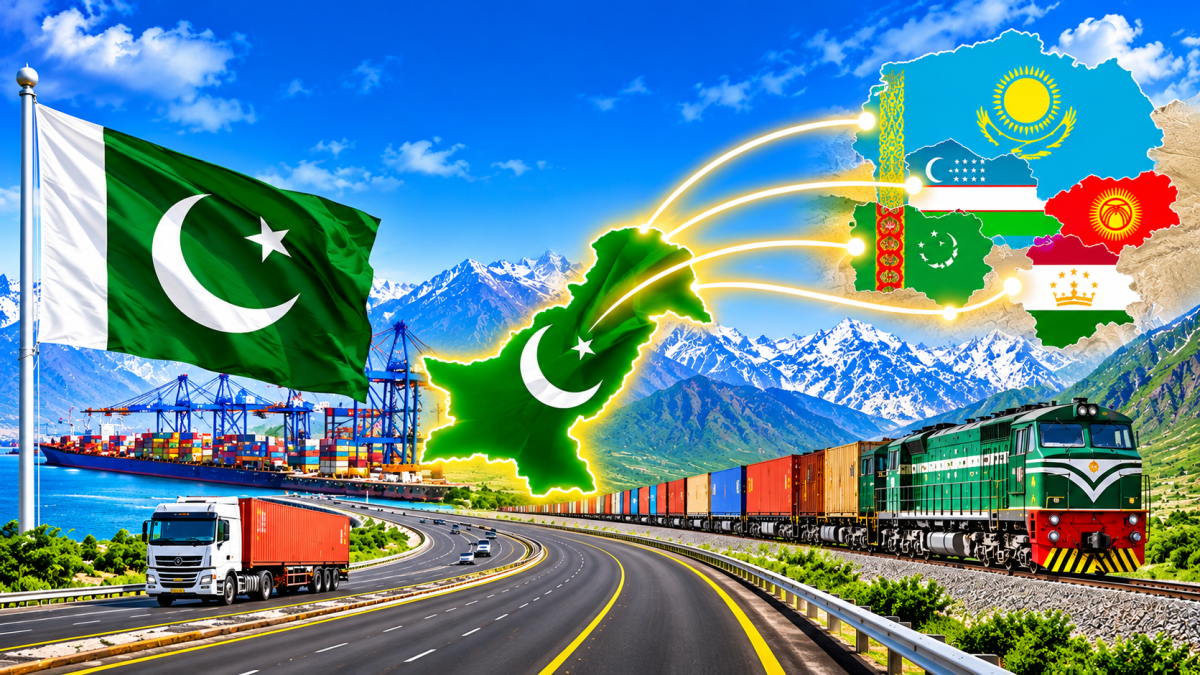
Pakistan possesses enormous potential to serve as a regional trade and transit hub. Its coastline along the Arabian Sea, particularly the ports of Karachi, Port Qasim, and Gwadar, provides landlocked Central Asian countries with an opportunity to access international maritime trade routes. Meanwhile, its geographical connection with China through the Karakoram Highway and its proximity to Afghanistan create opportunities for economic cooperation across the region.
The China-Pakistan Economic Corridor (CPEC) represents a major step towards realizing this potential. Initially developed as a bilateral economic initiative between Pakistan and China, CPEC has the capacity to become a broader regional connectivity network linking China with the Middle East, Africa, and Central Asia. Similarly, Pakistan's growing engagement with Central Asian Republics (CARs), including Uzbekistan, Kazakhstan, Kyrgyzstan, Tajikistan, and Turkmenistan, reflects its ambition to transform geographical advantages into economic opportunities.
Therefore, Pakistan's role in regional connectivity extends beyond infrastructure development. It represents an opportunity to promote regional trade, energy cooperation, economic integration, diplomatic relations, and long-term peace and stability.
1. Geostrategic Importance of Pakistan
Pakistan occupies a unique geographical position that gives it considerable importance in regional and international affairs. It connects South Asia with Central Asia through Afghanistan, links China with the Arabian Sea through the Karakoram region, and provides access to the Middle East through its southern coastline.
One of Pakistan's greatest geographical advantages is its access to warm waters and international shipping routes. Countries such as Uzbekistan, Tajikistan, Kyrgyzstan, Kazakhstan, and Afghanistan are either landlocked or depend on external transit routes to reach international markets. Pakistan can provide these countries with relatively direct access to the Arabian Sea through its seaports.
Furthermore, Pakistan's geographical position offers opportunities to develop north-south and east-west trade corridors. The north-south connection can link Central Asian markets with Pakistani ports, while the east-west connection can facilitate trade between China, Pakistan, the Middle East, and beyond.
However, geographical importance alone cannot guarantee economic success. Efficient infrastructure, political stability, regional cooperation, security, and consistent economic policies are essential to transform Pakistan into an effective regional connectivity hub.
2. China-Pakistan Economic Corridor (CPEC): A Gateway to Regional Connectivity
The China-Pakistan Economic Corridor is one of the most significant infrastructure and economic cooperation initiatives in South Asia. Launched in 2015 as a flagship project of China's Belt and Road Initiative (BRI), CPEC aims to strengthen economic relations between Pakistan and China through investment in energy, transportation, infrastructure, industrial development, and Gwadar Port.
CPEC is not simply a road-building project; rather, it represents a comprehensive framework for economic development and regional integration.
Major Components of CPEC
A. Development of Transportation Infrastructure
One of the central objectives of CPEC is to improve Pakistan's transportation network. Roads, highways, and expressways connect different regions of the country and improve access to commercial centres. Projects such as the Karakoram Highway and other major road networks are important for facilitating trade between Pakistan and China.
Improved transportation infrastructure can reduce travel time, lower the cost of moving goods, attract investment, and strengthen Pakistan's connections with neighbouring regions.
B. Gwadar Port: Pakistan's Strategic Gateway
Gwadar Port is a central component of CPEC and has considerable potential to transform Pakistan into a regional maritime and trade hub. Located near the strategically important Strait of Hormuz, Gwadar provides access to major international shipping routes.
The development of Gwadar Port, its free zone, Eastbay Expressway, and New Gwadar International Airport has strengthened the infrastructure necessary for its future commercial role. The airport was inaugurated in October 2024, while several other supporting facilities are included in the CPEC development programme.
Gwadar can serve as an important gateway for Central Asian countries seeking access to international markets. Through improved road and rail connections, goods from Central Asia could potentially be transported to Gwadar and Karachi for export to the Middle East, Africa, and other international destinations.
C. Energy Cooperation
Energy development is another major pillar of CPEC. Pakistan has faced serious energy shortages that have historically affected industrial production and economic growth. CPEC energy projects have helped increase electricity generation capacity and strengthen energy infrastructure.
Projects involving coal, hydropower, solar, and wind energy have contributed to Pakistan's electricity supply. The development of energy infrastructure is important not only for domestic economic growth but also for creating the foundation for future regional energy cooperation.
D. Industrial Cooperation and Special Economic Zones
CPEC also provides opportunities for industrial development through Special Economic Zones (SEZs). These zones are intended to attract domestic and foreign investment, encourage manufacturing, promote technology transfer, and create employment opportunities.
Industrial cooperation can enable Pakistan to become part of regional and international supply chains. It can also encourage businesses from China and Central Asian countries to establish manufacturing and distribution facilities in Pakistan.
CPEC and Its Regional Significance
Although CPEC began as a bilateral initiative, its strategic significance extends beyond Pakistan and China. It has the potential to connect Central Asia with the Arabian Sea and provide alternative trade routes for regional economies.
If supported by effective transport agreements, railway networks, and regional cooperation, CPEC could become an important component of a wider Eurasian connectivity system.
3. Pakistan's Connectivity with Central Asia
Central Asia is an economically and strategically important region, rich in natural resources, including oil, natural gas, minerals, and agricultural products. The region also has growing markets and significant potential for industrial and commercial development.
Pakistan's relations with Central Asian Republics have traditionally been influenced by geographical proximity, cultural connections, historical links, and shared economic interests. In recent years, both sides have shown increasing interest in developing stronger trade, transportation, investment, and energy relationships.
Pakistan can provide Central Asian countries with access to the Arabian Sea, while Central Asia can offer Pakistan new markets, energy resources, and opportunities for economic diversification.
A. Trade and Economic Cooperation
Pakistan has significant opportunities to increase its exports to Central Asian markets. Pakistani agricultural products, pharmaceuticals, textiles, surgical instruments, sports goods, and manufactured products can find potential markets in these countries.
Similarly, Pakistan can import natural gas, petroleum products, minerals, fertilizers, and other commodities from Central Asia.
However, trade between Pakistan and Central Asian countries remains below its potential. Transportation difficulties, customs procedures, limited banking connections, political uncertainties, and security challenges have restricted commercial activities.
To address these problems, Pakistan needs to improve trade facilitation, simplify customs procedures, strengthen banking cooperation, and establish reliable transportation arrangements.
B. Connectivity with Uzbekistan
Uzbekistan is among Pakistan's most important potential economic partners in Central Asia. Both countries have shown interest in expanding bilateral trade, investment, transportation, tourism, and cultural relations.
The proposed Uzbekistan-Afghanistan-Pakistan (UAP) railway is particularly significant. The project is intended to connect Uzbekistan's railway network with Afghanistan and Pakistan, providing Central Asian countries with access to Pakistani seaports.
In July 2025, Pakistan, Afghanistan, and Uzbekistan signed a framework agreement concerning the railway project. The proposed route is expected to improve regional transportation and reduce the cost and time involved in moving goods.
If successfully implemented, the railway could transform Pakistan's economic relationship with Central Asia and create new opportunities for trade with international markets.
C. Connectivity with Kazakhstan and Kyrgyzstan
Kazakhstan and Kyrgyzstan are also important partners in Pakistan's regional connectivity strategy.
The Quadrilateral Traffic in Transit Agreement (QTTA), signed in 1995 by Pakistan, China, Kyrgyzstan, and Kazakhstan, provides a framework for facilitating transit transportation and trade among the participating countries.
This agreement is particularly important because it offers an institutional basis for improving road connectivity between Pakistan and Central Asia through China.
Pakistan can further strengthen these relationships by expanding transport facilities, improving border management, and promoting business-to-business cooperation.
D. Relations with Tajikistan and Turkmenistan
Tajikistan and Turkmenistan also offer significant opportunities for Pakistan.
Tajikistan possesses considerable hydropower potential, while Turkmenistan has substantial natural gas reserves. Both countries can become important partners in Pakistan's energy security and regional economic development.
Improved transportation links and energy cooperation can strengthen Pakistan's relationship with these countries and contribute to greater regional interdependence.
4. Energy Connectivity: CASA-1000 and TAPI Projects
Energy cooperation is another important dimension of Pakistan's regional connectivity strategy. Central Asia possesses substantial energy resources, while Pakistan faces increasing demand for electricity and natural gas. This situation creates opportunities for mutually beneficial energy partnerships.
Two major projects are particularly important in this regard.
A. CASA-1000 Project
The Central Asia-South Asia Electricity Transmission and Trade Project (CASA-1000) aims to facilitate the transmission of surplus electricity from Kyrgyzstan and Tajikistan to Afghanistan and Pakistan.
The project is designed to connect energy-rich Central Asian countries with electricity-deficient markets in South Asia. It can help Pakistan obtain electricity during the summer months, when hydropower generation in Central Asia is relatively high.
CASA-1000 has several potential benefits:
· Diversification of Pakistan's energy supply.
· Greater cooperation between South and Central Asian countries.
· Reduction of electricity shortages during peak demand periods.
· Development of cross-border energy infrastructure.
· Promotion of economic interdependence and regional stability.
However, its success depends on security conditions, infrastructure completion, and effective cooperation among participating countries.
B. Turkmenistan-Afghanistan-Pakistan-India (TAPI) Gas Pipeline
The TAPI gas pipeline is another important regional connectivity initiative. It aims to transport natural gas from Turkmenistan through Afghanistan and Pakistan to India.
The project has the potential to strengthen energy security in participating countries and promote regional economic cooperation. For Pakistan, access to Turkmenistan's natural gas could help diversify its energy resources and support industrial development.
Nevertheless, security concerns in Afghanistan, financing difficulties, and political differences have affected the project's implementation.
Despite these challenges, TAPI remains an important example of how energy infrastructure can promote cooperation among countries with different political and economic interests.
5. Opportunities for Pakistan Through Regional Connectivity
Pakistan's regional connectivity strategy offers several economic, political, and strategic opportunities.
A. Expansion of International Trade
Improved connectivity can provide Pakistan with access to new markets in Central Asia, China, the Middle East, and Europe. It can increase exports, attract foreign investment, and strengthen Pakistan's participation in international supply chains.
B. Development of Gwadar as a Regional Trade Hub
Gwadar has the potential to become a major commercial and maritime centre. Through efficient road and railway connections, it could facilitate the transportation of goods from Central Asia to international markets.
C. Foreign Direct Investment
Improved regional connectivity can attract investment from China, Central Asian countries, and other international partners. Investors may find opportunities in logistics, manufacturing, energy, agriculture, mining, and infrastructure development.
D. Employment and Economic Growth
Infrastructure projects, industrial zones, transportation facilities, and commercial activities can generate employment opportunities for Pakistan's population.
These developments can also encourage economic growth in less-developed regions, particularly Balochistan and Khyber Pakhtunkhwa.
E. Strengthening Diplomatic Relations
Economic interdependence can improve diplomatic relations between neighbouring countries. Trade agreements, joint infrastructure projects, and energy cooperation can create common interests and encourage peaceful relations.
F. Greater Regional Importance
By connecting South Asia, Central Asia, China, and the Middle East, Pakistan can strengthen its position as an important regional economic and diplomatic partner.
6. Conclusion
Pakistan stands at an important crossroads in the changing regional economic and geopolitical environment. Its geographical location, access to the Arabian Sea, strategic relationship with China, and proximity to Central Asia provide it with significant opportunities to become a major regional connectivity hub.
CPEC has created a foundation for this vision through investments in transportation infrastructure, energy development, industrial cooperation, and Gwadar Port. At the same time, Pakistan's growing engagement with Central Asian Republics, particularly through the proposed Uzbekistan-Afghanistan-Pakistan railway, CASA-1000, TAPI, and existing transit agreements, offers opportunities to expand regional economic integration.
However, the realization of this potential requires more than infrastructure development. Political stability, regional peace, economic reforms, effective governance, improved security, and sustained diplomatic engagement are equally important.
Pakistan must move beyond viewing itself merely as a transit country and develop into a regional centre for trade, investment, manufacturing, logistics, and energy cooperation.
Ultimately, the future of Pakistan's regional connectivity depends on its ability to transform geographical advantages into practical economic achievements. If Pakistan successfully connects CPEC with Central Asian markets and establishes reliable links with regional economies, it can contribute significantly to regional prosperity, economic integration, and lasting peace.
In this regard, the journey from CPEC to Central Asia is not simply a transportation initiative; it is a strategic vision for a more connected, economically prosperous, and cooperative region.

Ovais Ali Khokhar, as Founder and CEO of House of Elaan & Ovaisco Group, has revolutionized the real estate industry with innovative strategies that blend marketing, investment, legal services, and creativity. His efforts in international relations have led to significant global partnerships. He is deeply invested in youth empowerment, aiming to nurture the next generation of leaders and drive forward a resilient and vibrant future. His work is characterized by a strong commitment to collaboration, innovation, and a vision for a globally connected, sustainable future.
Ovais Ali Khokhar
President Elaan Research Center