



The Mecca Accord: Pakistan's Role in World Peace, and Enhancing the Regional Security Cooperation
Introduction
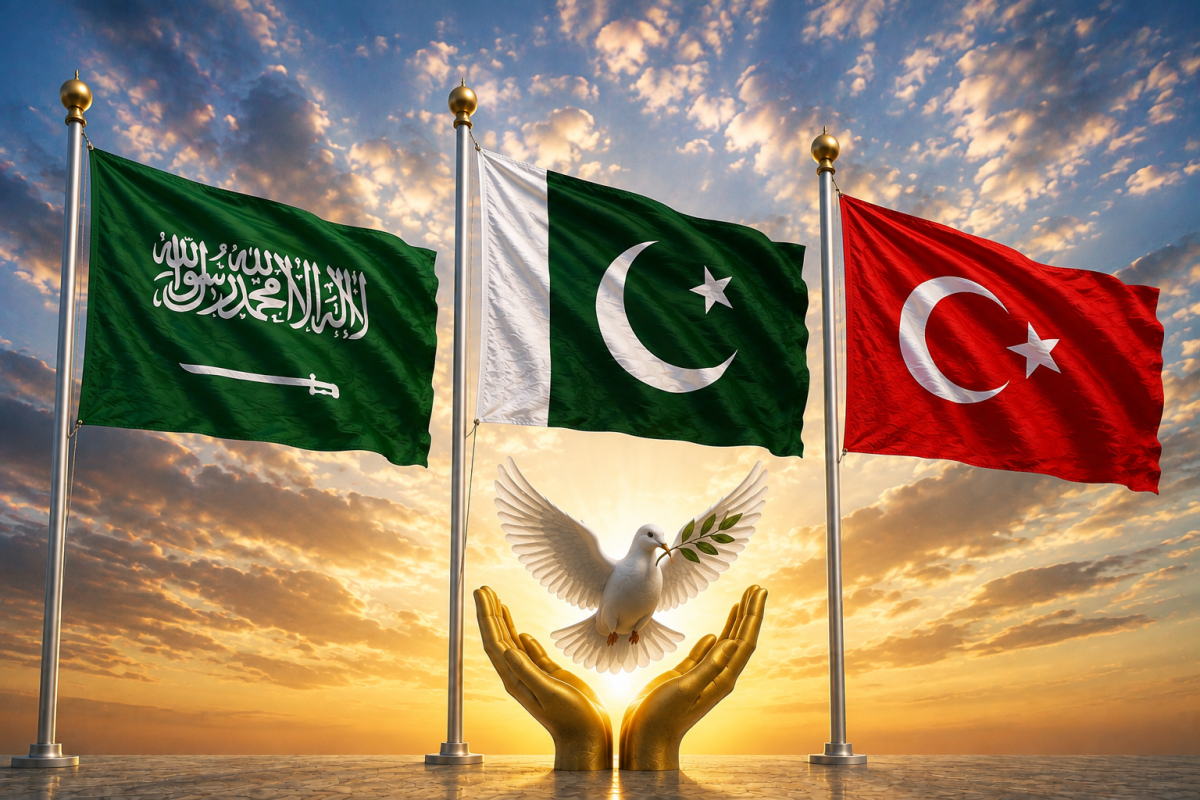
The Mecca Joint Defence Agreement, signed by Pakistan, Saudi Arabia, and Türkiye on 7th August 2026, represents an important development in the security landscape of the Muslim world. The agreement is based on the principle that an armed attack against one member will be treated as an attack against all, while its signatories have described it as defensive rather than directed against any particular country.
The agreement builds upon long-standing political, economic, military, and diplomatic relations among the three countries.
The importance of the Mecca Accord extends beyond military cooperation. It has the potential to improve regional stability, strengthen deterrence, encourage intelligence sharing, develop defence capabilities, and promote greater cooperation among Muslim nations. For Pakistan, the accord provides an opportunity to contribute its military experience and diplomatic influence to regional and international peace.
A Partnership of Complementary Capabilities
One of the most important benefits of the Mecca Accord is the strengthening of collective security. Pakistan, Saudi Arabia, and Türkiye possess complementary strategic capabilities. Pakistan has extensive military experience, Saudi Arabia has considerable economic and regional influence, while Türkiye possesses advanced defence technology and substantial military capacity. Closer cooperation can therefore increase the collective ability of the three states to respond to security threats.
Regional Benefits of the Mecca Accord
The agreement can also improve deterrence. When states know that aggression against one country may generate a collective response, the possibility of conflict can become more costly. Strong deterrence can help prevent war rather than encourage it, provided that the participating states maintain responsible policies and clearly communicate that their objective is defence.
Another benefit is increased intelligence and counter-terrorism cooperation. Muslim countries face common challenges from terrorism, violent extremism, organized crime, cyber threats, and instability. Joint intelligence mechanisms, training, exercises, and information sharing can improve the ability of states to prevent attacks and protect their populations.
The accord may also encourage greater defence-industry cooperation. Joint research, training, technology development, and defence production can reduce dependence on external powers and increase the strategic autonomy of participating Muslim states.
Pakistan’s Role in World Peace
Pakistan has historically presented itself as a supporter of international peace, multilateral diplomacy, and peaceful settlement of disputes. One of its most visible contributions is through United Nations peacekeeping operations. Pakistan has been among the major contributors of military and police personnel to UN peacekeeping and has participated in missions across different regions of the world.
Pakistan's peacekeeping role demonstrates that its contribution to international security is not limited to military alliances. Pakistani personnel have served in difficult conflict environments, helping protect civilians, maintain stability, and support peace processes. This gives Pakistan valuable practical experience that can contribute to broader regional security initiatives.
Diplomatically, Pakistan can also serve as a bridge between different regions and states. Its relationships with Middle Eastern, Central Asian, South Asian, and other Muslim countries give it opportunities to encourage dialogue and reduce tensions. Pakistan's participation in international organizations, including the United Nations and the Organization of Islamic Cooperation, provides additional platforms for promoting peaceful solutions.
Enhancing the Regional Security Cooperation
The security of Muslim nations cannot depend exclusively on military power. Sustainable security requires political stability, economic development, cooperation against terrorism, food and energy security, technological advancement, and peaceful diplomacy.
The Mecca Accord can contribute to this broader concept of security by encouraging Muslim countries to cooperate rather than respond individually to common challenges. Greater coordination can improve crisis management and create mechanisms for consultation during regional emergencies.
Pakistan can play a particularly important role in this process because of its military expertise, strategic location, diplomatic relationships, and experience in international peacekeeping. Cooperation between Pakistan, Saudi Arabia, and Türkiye could potentially serve as a model for wider collaboration among Muslim states.
However, regional security cooperation should remain inclusive and focused on peace. Collective security should support sovereignty, peaceful coexistence, dialogue, and respect for international law.
Conclusion
The Mecca Accord is potentially an important step toward a stronger regional security framework. Its greatest significance lies not simply in military cooperation but in the possibility of developing a culture of collective responsibility, consultation, deterrence, and peace among Muslim nations.
Pakistan has an important role in this process. Through its military capabilities, UN peacekeeping experience, diplomatic engagement, and relationships with Muslim countries, Pakistan can contribute to both regional and global stability. The long-term success of the Mecca Accord will depend on whether its members transform their commitments into effective cooperation while maintaining a clear commitment to peace.
Ultimately, the security of Muslim nations should be pursued through a balanced combination of defence, diplomacy, economic cooperation, counter-terrorism, development, and peaceful conflict resolution. If implemented responsibly, the Mecca Accord can contribute to a more stable region and strengthen the ability of Muslim countries to protect their sovereignty while supporting international peace.
Ovais Ali Khokhar, as Founder and CEO of House of Elaan & Ovaisco Group, has revolutionized the real estate industry with innovative strategies that blend marketing, investment, legal services, and creativity. His efforts in international relations have led to significant global partnerships. He is deeply invested in youth empowerment, aiming to nurture the next generation of leaders and drive forward a resilient and vibrant future. His work is characterized by a strong commitment to collaboration, innovation, and a vision for a globally connected, sustainable future.