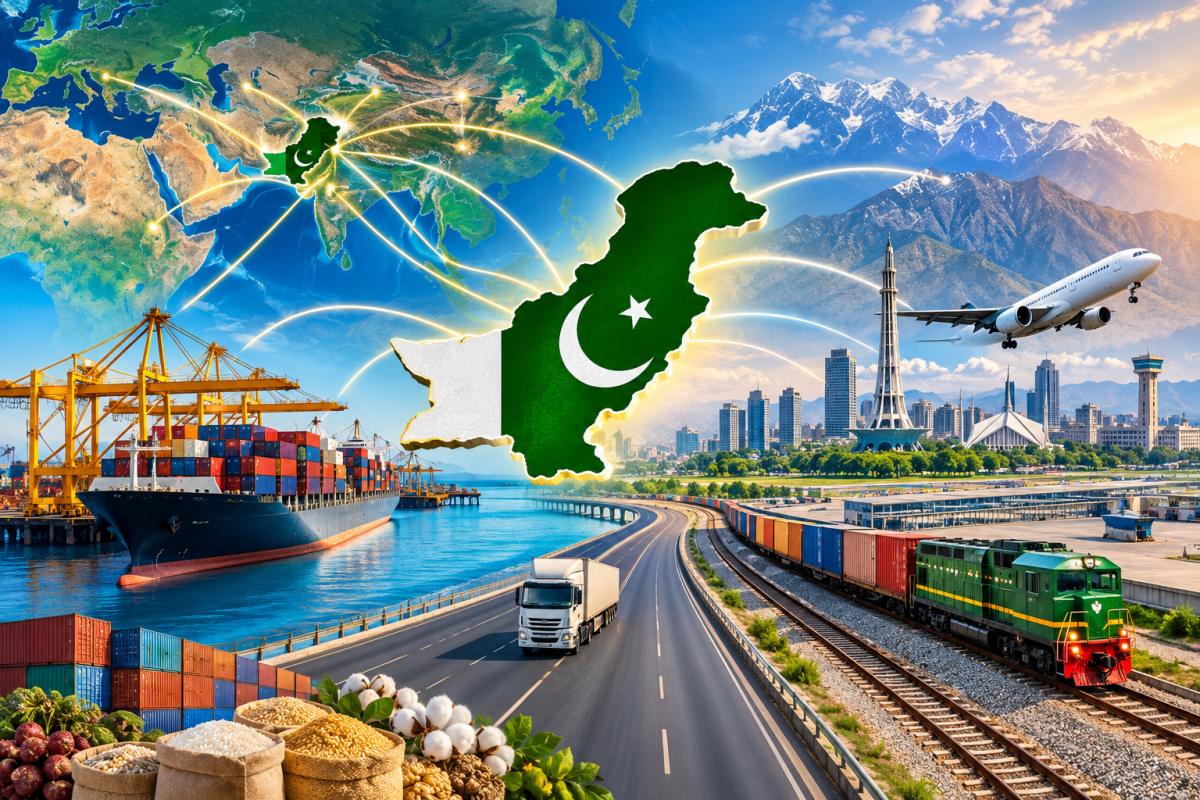




The Rise of Freelancing in Pakistan: Can the Digital Economy Create More Jobs?

Introduction
Pakistan faces a persistent challenge of creating productive employment for its large and growing population, particularly for young people entering the labour market every year. At the same time, the global economy is undergoing a major digital transformation. Services that once required employees to work in physical offices can increasingly be delivered remotely through the internet. This transformation has created a new economic opportunity for Pakistan: freelancing.
Freelancing allows individuals to provide services directly to clients and companies, often located in other countries, without becoming permanent employees of those organizations. Pakistani freelancers work in areas such as software development, graphic design, digital marketing, content writing, animation, virtual assistance, data analysis and other digital services.
The growth of Pakistan's information-technology sector demonstrates the increasing importance of this opportunity. During July–March FY2025, Pakistan's ICT services exports reached US$2.825 billion, an increase of 23.7 percent over the same period of the previous fiscal year. During the same period, Pakistan-based freelancers generated approximately US$400 million in foreign-exchange earnings.
The question, however, is whether freelancing can become a significant source of employment and foreign exchange for Pakistan or whether it will remain an opportunity available mainly to a relatively small group of highly skilled workers. The answer depends on Pakistan's ability to improve digital skills, internet infrastructure, financial systems, education and access to international markets.
Understanding Freelancing
A freelancer is an independent worker who provides services to clients without necessarily being employed by them on a permanent basis. A freelancer may work for several clients simultaneously and can often work from home or a shared workspace.
Digital freelancing has expanded because of improvements in internet connectivity and online payment systems. Platforms and professional networks allow Pakistani workers to connect with clients in North America, Europe, the Middle East and other international markets.
The attraction of freelancing is particularly strong in a country such as Pakistan. A young person does not necessarily need to migrate abroad to access an international market. Instead, they can potentially sell their skills from Pakistan and receive payment from foreign clients.
This changes the traditional relationship between employment and geography.
A software developer in Lahore, a graphic designer in Islamabad, or a digital marketer in Peshawar can provide services to a client thousands of kilometres away without leaving Pakistan.
Pakistan's Growing Digital Economy
Freelancing cannot be separated from the broader expansion of Pakistan's IT and digital-services sector.
According to the Pakistan Economic Survey 2024–25, ICT services exports increased by US$541 million during July–March FY2025, reaching US$2.825 billion. The sector recorded a trade surplus of approximately US$2.4 billion, the highest among Pakistan's services sectors during that period.
The State Bank of Pakistan has also reported strong growth in ICT exports. During FY2024, Pakistan's ICT exports increased by 24.1 percent to approximately US$3.2 billion, with computer services accounting for more than 80 percent of total ICT exports. State Bank of Pakistan
Freelancers form an important part of this digital ecosystem.
Pakistan's Economic Survey recorded approximately US$400 million in freelancer remittances during July–March FY2025. Finance Division
More recent data indicates that the contribution has continued to grow. During July–March FY2025–26, freelance exports reportedly reached US$856.3 million, compared with US$567.5 million during the corresponding period of the previous fiscal year.
These figures indicate that freelancing is becoming more significant within Pakistan's services-export economy.
An Opportunity for Youth Employment
One of the strongest arguments in favour of freelancing is its potential to create opportunities for young people.
Pakistan has a large youth population, and every year thousands of graduates and other young workers enter the labour market. Traditional employment sectors cannot always absorb all new entrants.
Freelancing provides an alternative route.
A young person does not necessarily need to wait for a government job or a position in a large private company. With appropriate training, a computer and reliable internet access, an individual can attempt to enter the international services market.
This does not mean that every young person can immediately become a successful freelancer. Competition is intense, and clients generally demand high-quality work. However, freelancing expands the range of possible employment pathways.
It also has the potential to benefit people living outside Pakistan's largest cities. Remote work can reduce the geographical concentration of employment opportunities, provided that smaller cities and rural areas have adequate internet connectivity and digital infrastructure.
Foreign Exchange and Economic Benefits
Freelancing is important not only because it can create individual income but also because it can generate foreign exchange.
When a Pakistani freelancer provides a service to a foreign client and receives payment in foreign currency, the transaction contributes to the country's services-export earnings.
This is particularly relevant for Pakistan because the country has historically faced pressure on its external account and depends heavily on foreign-exchange earnings from merchandise exports, remittances and services.
Unlike many physical exports, digital services do not require the transportation of goods across borders. A Pakistani programmer can deliver software remotely, while a graphic designer can send a completed project electronically.
The economic model is therefore relatively capital-light.
Pakistan Economic Survey data shows the importance of this broader sector: during July–March FY2025, IT and IT-enabled services generated a trade surplus of approximately US$2.4 billion.
The expansion of digital services can consequently help diversify Pakistan's export base.
Opportunities for Women
Freelancing may also provide economic opportunities for women who face barriers to conventional employment.
Some women may find it difficult to travel long distances to workplaces because of transportation, family responsibilities or other circumstances. Remote work can reduce some of these barriers by allowing individuals to work from home.
Women can participate in fields such as writing, graphic design, programming, online teaching, digital marketing and virtual assistance.
However, digital work should not be presented as a complete solution to women's employment challenges. Access to computers, reliable internet, digital skills, financial services and a suitable working environment remains necessary.
Nevertheless, the possibility of earning through remote work represents an additional pathway to economic participation.
The Role of Education and Skills
The biggest determinant of success in freelancing is not simply internet access but marketable skills.
A person with basic computer literacy may be able to enter the digital economy, but international clients generally compete on quality, reliability, communication and specialization.
Skills in software development, artificial intelligence, cybersecurity, data science, cloud computing, graphic design, video production and digital marketing can potentially command higher-value international work.
Pakistan therefore needs to connect education with the requirements of the global digital market.
The Pakistan Economic Survey 2024–25 reports that 6,400 professionals received training in advanced technologies during the first nine months of FY2025, while more than 2,700 interns were placed in IT companies.
Such programmes can help, but the scale of training needs to remain aligned with the size of Pakistan's labour force.
The Importance of Digital Infrastructure
Freelancing depends fundamentally on reliable internet and electricity.
A freelancer can lose an international client if an important meeting is interrupted by an internet outage or if electricity problems prevent a project from being completed on time.
Pakistan has made considerable progress in expanding broadband connectivity. The Economic Survey 2024–25 reported approximately 147.2 million broadband subscribers by March 2025.
However, connectivity alone is insufficient.
Internet speed, affordability, reliability and access in smaller cities and rural communities all matter. Electricity reliability is also important because freelancers often work according to the schedules of clients located in different time zones.
Improving digital infrastructure should therefore be considered an essential part of employment policy.
Banking and Payment Challenges
For years, receiving international payments efficiently has been one of the practical challenges faced by Pakistani freelancers.
A freelancer may complete a project successfully but still experience difficulties receiving or retaining foreign earnings because of banking procedures, documentation requirements or restrictions related to foreign-currency transactions.
The State Bank of Pakistan has introduced measures intended to facilitate IT companies and freelancers. In 2023, the SBP increased the permissible retention limit for IT exporters and freelance-service exporters in Exporters' Special Foreign Currency Accounts from 35 percent to 50 percent of export proceeds.
More recently, in April 2026, the SBP introduced additional measures to simplify procedures for IT companies and freelancers, including standardized documentation, processing timelines and mechanisms for resolving complaints.
Such reforms matter because an international digital economy requires payment systems that are as efficient as the digital services themselves.
The Problem of Skill Gaps
Despite the potential of freelancing, Pakistan cannot assume that internet access alone will create large numbers of successful freelancers.
There is a significant difference between being able to use social media and possessing a skill that an international client is willing to purchase.
Many new freelancers enter highly competitive fields such as basic content writing, simple graphic design or data entry. These areas may have lower barriers to entry but can also involve intense international competition and downward pressure on prices.
The Pakistan Business Council has recently highlighted this challenge, reporting that of FY2025, PSEB-supported initiatives the median value of freelance transactions fell between FY2021 and FY2025 even as total freelance exports increased. Its analysis suggests that Pakistan's freelance sector is experiencing a division between higher-value skilled workers and lower-value, highly competitive work.
This suggests that Pakistan's objective should not simply be to increase the number of freelancers. It should be to increase the number of highly skilled and high-value digital professionals.
Artificial Intelligence: Threat and Opportunity
Artificial intelligence is transforming the global freelance market.
AI tools can automate certain tasks that were previously performed by freelancers, including basic writing, translation, image creation, coding assistance and data processing.
This creates a genuine challenge for freelancers whose services are easily automated.
At the same time, AI creates new opportunities. Skilled professionals can use AI to increase productivity, develop new services and work on more complex projects.
The implication for Pakistan is that training programmes should not focus only on older forms of digital work. Freelancers need to understand emerging technologies and learn how to work alongside them.
The future freelancer may not compete with artificial intelligence directly. Instead, successful professionals may increasingly be those who know how to use AI tools while providing human judgment, creativity, communication and specialized expertise.
Government Initiatives
The Pakistani government has increasingly recognized the potential of the IT and freelance economy.
The Pakistan Software Export Board has supported training, internships, certification and other programmes designed to improve the country's IT workforce. During the first nine months of FY2025, PSEB-supported initiatives trained thousands of professionals and placed more than 2,700 interns in IT companies.
The government has also announced plans for e-Rozgaar centres. The Pakistan Economic Survey 2024–25 states that PSEB launched an initiative to establish 250 e-Rozgaar centres by FY2027, with the aim of supporting freelance work and entrepreneurship and creating 20,000 jobs.
Such initiatives can be useful, particularly for individuals who do not have suitable workspaces or high-speed internet at home.
However, government programmes need to focus on measurable outcomes: employment, export earnings, business creation and sustainable income rather than simply the number of people trained.
The Way Forward
Pakistan can strengthen its freelance economy through a long-term strategy based on skills, infrastructure and market access.
1. Focus on high-value skills
Training should increasingly emphasize software engineering, cybersecurity, cloud computing, AI, data science, advanced design and other specialized fields.
2. Improve digital infrastructure
Affordable, reliable high-speed internet and stable electricity are essential for digital employment.
3. Reform digital payments
Banking procedures should remain simple, transparent and predictable for freelancers receiving international payments.
4. Strengthen English and communication skills
Technical ability alone is not sufficient. International freelancers also need professional communication, negotiation and client-management skills.
5. Expand opportunities beyond major cities
Digital work can potentially reduce geographical inequality if training centres and reliable connectivity reach smaller cities and rural areas.
6. Encourage entrepreneurship
Experienced freelancers should have pathways to establish agencies, startups and software companies rather than remaining permanently dependent on individual projects.
7. Prepare for AI
Training programmes should teach workers how to use AI productively and move toward services that require advanced judgment and specialized knowledge.
8. Measure outcomes
Government programmes should evaluate their success through sustained employment, export earnings, business creation and freelancer income rather than training numbers alone.
Can Freelancing Solve Pakistan's Employment Problem?
Freelancing can contribute to solving Pakistan's employment economy does not eliminate Pakistan's employment challenges, but it provides a new route through which Pakistani talent can participate in the global economy without physically challenge, but it cannot solve the entire problem by itself.
The traditional economy will continue to require teachers, doctors, engineers, farmers, manufacturers, construction workers, technicians and many other professionals. Digital freelancing should therefore be viewed as one component of a broader employment strategy.
Its greatest advantage is that it connects Pakistani workers directly with global demand.
Instead of depending entirely on the domestic labour market, skilled Pakistanis can sell services internationally. This can create employment and foreign-exchange earnings simultaneously.
However, the benefits will depend on the quality of skills and the ability of Pakistan's institutions to support digital workers.
Conclusion
The rise of freelancing represents one of the most significant opportunities created by Pakistan's digital transformation. During July–March FY2025, Pakistani freelancers generated approximately US$400 million in foreign-exchange earnings, while the country's ICT services exports reached US$2.825 billion. More recent data indicates that freelance exports continued to grow during FY2025–26.
These developments demonstrate that Pakistan already possesses a substantial pool of workers capable of participating in the global digital economy.
Yet the future of freelancing cannot depend simply on increasing the number of people registered on online platforms. Sustainable growth requires advanced skills, reliable internet, electricity, efficient banking systems, professional communication and access to higher-value international markets.
Artificial intelligence will further transform the sector. Some routine freelance activities may face increasing automation, while demand for specialized digital expertise may grow.
Pakistan therefore needs to move from a low-cost freelancing model toward a high-value digital-services economy. The objective should be to produce professionals who can compete internationally on expertise and quality rather than merely on low prices.
If Pakistan invests consistently in digital skills, infrastructure and innovation, freelancing can become more than an alternative source of individual income. It can become an important component of employment generation, entrepreneurship and services exports.
The digital economy does not eliminate Pakistan's employment challenges, but it provides a new route through which Pakistani talent can participate in the global economy without physically leaving the country. The success of this opportunity will ultimately depend on whether Pakistan can convert its large pool of young people into a skilled, competitive and globally connected digital workforce.

Mr. Obaid Ayub is a skilled professional with specialization in Finance and Operations. Demonstrating a proven track record, He possess a unique combination of skills tailored for the dynamic realms of finance, real estate, and marketing. He has successfully optimized business processes and implemented strategic financial initiatives, showcasing his ability to deliver tangible results. His expertise lies in developing and executing robust financial strategies aligned with organizational objectives, ensuring sustainable growth and profitability. He possess significant expertise in budgeting, forecasting, and financial analysis, contributing to the facilitation of well-informed decision-making.
Obaid Ayub
Director Operations House Of Elaan