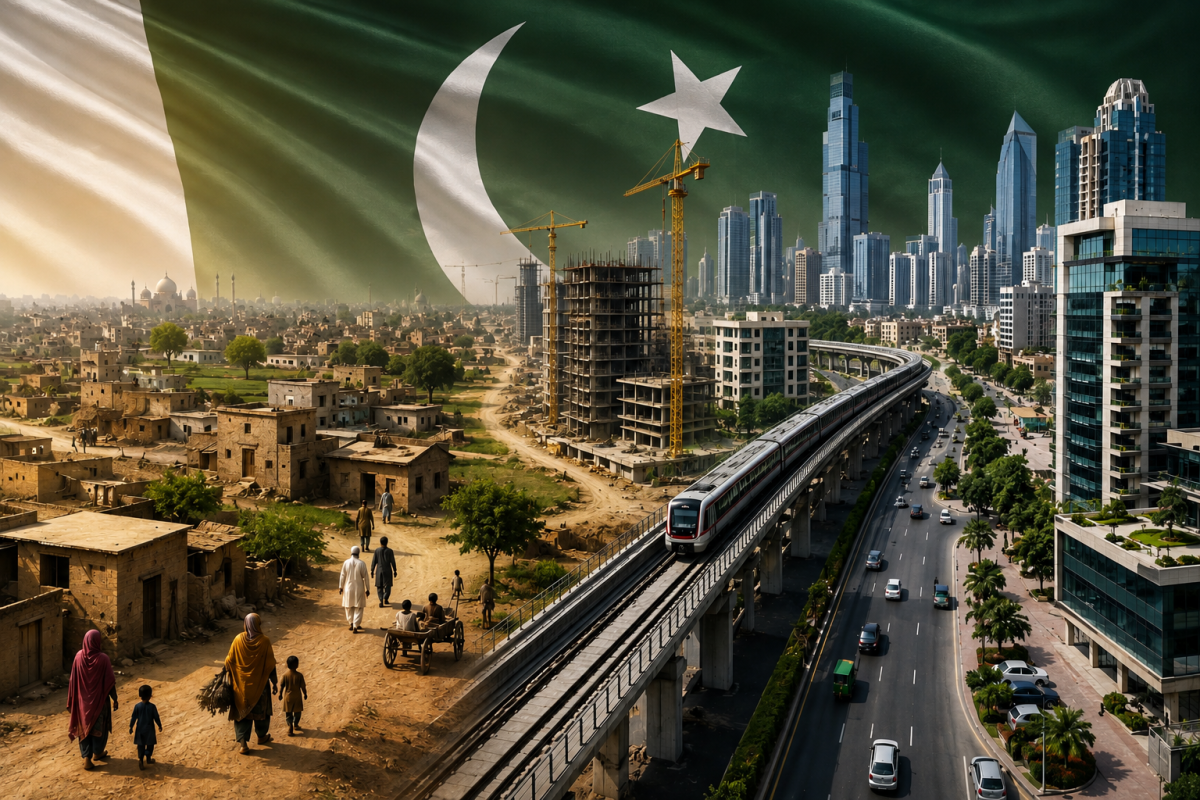




Pakistan's Potential as a Regional Trade and Connectivity Hub
Introduction
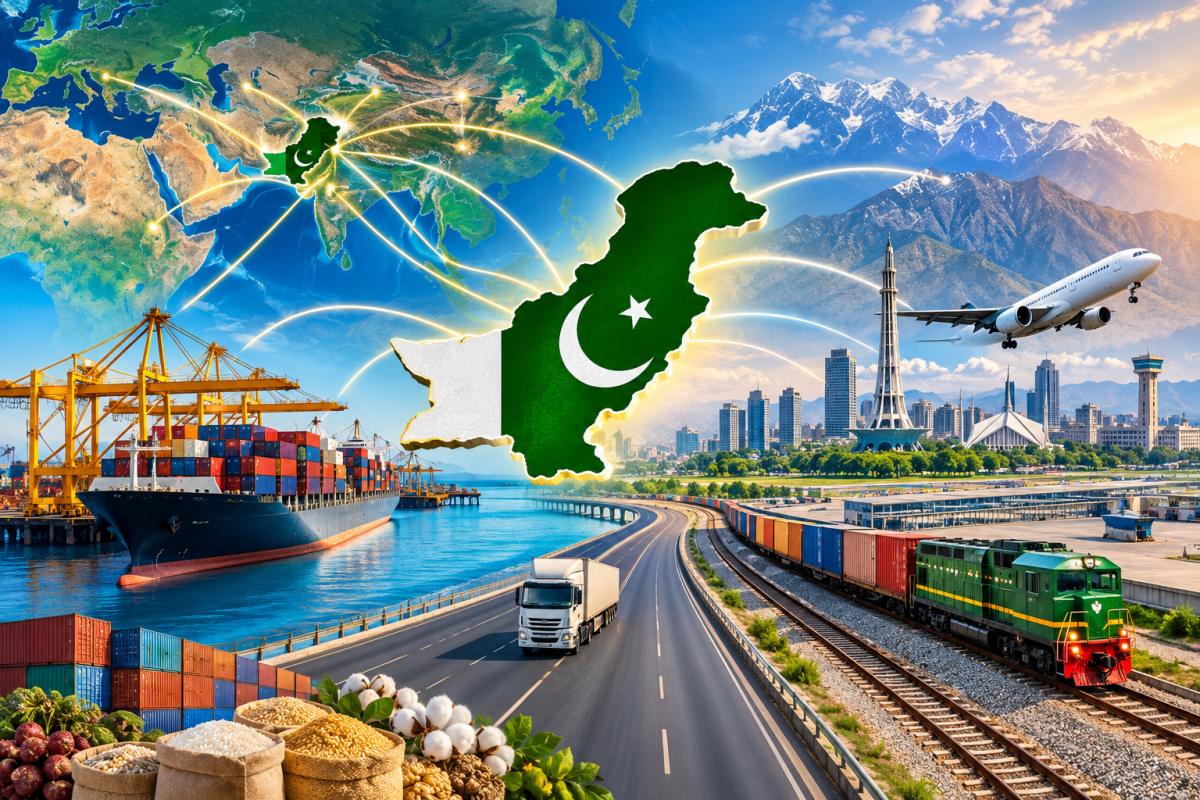
Pakistan occupies a distinctive geographical position at the crossroads of South Asia, Central Asia, the Middle East, and China. With access to the Arabian Sea, proximity to major regional economies, and connections to important land routes, the country has considerable potential to develop as a regional trade and connectivity hub. Its location provides a natural link between producers, consumers, and markets across several regions.
In an increasingly interconnected global economy, trade is no longer dependent only on the production of goods. Efficient transportation, reliable ports, digital networks, logistics services, energy connections, and cross-border cooperation have become equally important. Countries that can connect different markets efficiently can benefit from transit trade, investment, employment, logistics, and the development of related industries.
Pakistan has several geographical and infrastructural advantages that can contribute to this role. The country's coastline provides access to the Arabian Sea, while its road and rail networks connect major cities and commercial centers. Projects associated with the China-Pakistan Economic Corridor (CPEC), including transport and energy infrastructure, have further highlighted Pakistan's potential as a connecting point between China and the Arabian Sea.
At the same time, Pakistan's connectivity potential extends beyond a single economic corridor. Its location allows it to explore stronger commercial relationships with Central Asian states, China, Iran, Afghanistan, the Gulf region, and other international markets. If supported by efficient infrastructure, modern logistics, trade facilitation, and regional cooperation, Pakistan can strengthen its position as a gateway for regional commerce.
Geographic Advantage
Geography is one of Pakistan's most significant assets. The country lies between several economically important regions. To the east is India, to the west are Iran and Afghanistan, while China is located to the north. Beyond Pakistan's southern coastline lies the Arabian Sea, which provides access to international maritime trade routes.
This location gives Pakistan the possibility of serving as a bridge between landlocked Central Asian countries and the sea. Countries such as Uzbekistan, Kazakhstan, Tajikistan, Kyrgyzstan, and Turkmenistan have limited direct access to global maritime routes. Efficient connections through Pakistan could provide additional commercial options for reaching international markets.
Pakistan is also relatively close to the Gulf region, one of the world's major centers of energy, trade, finance, and logistics. This geographical proximity creates opportunities for stronger commercial links between Pakistani businesses and Gulf markets.
The country's location therefore provides a foundation for multiple forms of connectivity: road transportation, railways, maritime trade, aviation, energy cooperation, and digital communication. These different forms of connectivity can complement one another and contribute to a broader regional economic network.
Ports and Maritime Connectivity
Pakistan's coastline is central to its potential as a trade hub. The country's major seaports provide access to international shipping routes and can support the movement of imports and exports.
The Port of Karachi has historically played an important role in Pakistan's commercial activity. Port Qasim also serves as a major maritime gateway, supporting industrial and commercial operations. In Balochistan, Gwadar Port has attracted considerable attention because of its location near important maritime routes and its connection with CPEC.
Port of Karachi, Port Qasim, and Gwadar can collectively contribute to Pakistan's maritime connectivity. Their development can support not only the movement of containers but also logistics, warehousing, manufacturing, processing, and other economic activities associated with ports.
A modern trade hub requires more than ports themselves. Efficient links between ports and inland markets are equally important. Roads, railways, customs facilities, warehouses, freight terminals, and digital tracking systems can help goods move efficiently from ports to their final destinations.
The development of port-related economic activity can also generate opportunities for shipping companies, logistics providers, exporters, importers, financial institutions, and small and medium-sized businesses.
China-Pakistan Economic Connectivity
China is an important part of Pakistan's connectivity vision. The China-Pakistan Economic Corridor is a major component of the Belt and Road Initiative and has brought attention to infrastructure and economic cooperation between the two countries.
CPEC includes cooperation in areas such as transportation, energy, industrial development, and infrastructure. Improved road connections can strengthen links between Pakistan's major commercial centers and provide routes toward the country's northern border with China.
The Karakoram Highway is particularly significant in this context because it provides a land connection between Pakistan and China through the mountainous northern region. Although geography presents considerable challenges, the route demonstrates the importance of Pakistan's position between China and the Arabian Sea.
Greater connectivity with China can potentially support bilateral trade and provide opportunities for Pakistani businesses to access one of the world's largest consumer and manufacturing markets. At the same time, Pakistan's location can provide China with additional commercial connections toward the Arabian Sea and markets in the Middle East and beyond.
The long-term importance of this relationship will depend on continued investment, efficient transportation, trade facilitation, and the ability of businesses to make productive use of improved connectivity.
Connections with Central Asia
Central Asia represents another important opportunity for Pakistan. The region has abundant natural resources, growing economies, and expanding demand for international trade routes. However, several Central Asian countries are landlocked, creating a need for efficient connections to global markets.
Pakistan can potentially provide Central Asian states with access to the Arabian Sea through road and rail links. Such connections could facilitate the movement of commodities, manufactured products, agricultural goods, and other forms of trade.
Pakistan's relationship with Uzbekistan is particularly relevant to regional connectivity. Transport and trade cooperation between Pakistan and Central Asian countries can contribute to the development of north-south commercial routes.
The Trans-Afghan transport routes are also important in this context. Afghanistan's geographical position makes it a potential connecting point between Pakistan and Central Asia. Regional stability and effective border-management arrangements can therefore support the development of broader commercial networks.
Improved connections with Central Asia could create opportunities for Pakistani exporters while also increasing the movement of Central Asian products through Pakistani ports. This would benefit the logistics sector and could encourage investment in warehousing, transportation, and related services.
Regional Trade and the Role of Afghanistan
Afghanistan shares a long border with Pakistan and occupies an important geographical position between South Asia and Central Asia. Its location means that regional connectivity projects can have economic significance beyond individual countries.
Trade between Pakistan and Afghanistan has traditionally included agricultural products, food items, textiles, manufactured goods, and other commodities. Improved trade procedures and transportation facilities can make commercial exchanges more efficient.
Pakistan can also serve as a transit route for goods moving between Afghanistan and international markets. Modern border terminals, customs systems, warehousing facilities, and transport infrastructure can support this role.
Regional connectivity is most effective when neighboring countries cooperate. Agreements on customs procedures, transportation standards, border management, and transit trade can help reduce delays and make cross-border commerce more predictable.
From this perspective, Pakistan's connectivity potential is closely connected with wider regional cooperation. Roads and ports alone cannot create a successful trade corridor; countries along the route need coordinated systems that allow goods and people to move efficiently.
Railways and Road Networks
Transportation infrastructure is the backbone of regional trade. Pakistan has an extensive road network connecting major urban, industrial, and agricultural areas. The country's highways provide links between ports, cities, industrial zones, and border regions.
The development and modernization of railways can further strengthen this network. Rail freight is particularly useful for transporting large quantities of goods over long distances. Greater integration between railway networks, ports, highways, and logistics centers could improve the efficiency of Pakistan's overall trade system.
Multimodal transportation—where road, rail, and maritime transport operate as parts of a connected system—can make Pakistan more attractive as a regional logistics center.
For example, goods arriving at a seaport could be transported by rail to an inland logistics facility and then delivered by road to their destination. Such integration reduces the need to depend on a single mode of transportation and can create opportunities for logistics companies and industrial businesses.
Modern transport infrastructure can also benefit domestic commerce. Better connections between agricultural regions, manufacturing centers, cities, and ports can make it easier for Pakistani producers to reach both domestic and international consumers.
Digital Connectivity and Modern Trade
Regional connectivity is no longer limited to physical infrastructure. Digital technology has become an essential part of international trade.
Electronic customs systems, digital payments, online business platforms, cargo tracking, and data-sharing systems can make trade faster and more transparent. Pakistan's growing information-technology sector provides an additional dimension to its connectivity potential.
Digital trade can allow Pakistani companies to participate in international markets without physically transporting every service or product across borders. Software development, freelancing, financial technology, online education, and professional services can connect Pakistani businesses with customers around the world.
The development of digital infrastructure can therefore complement physical connectivity. A modern trade hub requires both efficient movement of goods and efficient movement of information.
Pakistan's young population and expanding technology sector provide a foundation for greater participation in the digital economy. As internet access, digital payments, and e-commerce continue to develop, Pakistani businesses may gain additional opportunities to participate in regional and global markets.
Economic Opportunities
Pakistan's development as a regional trade and connectivity hub could create opportunities across multiple sectors.
The logistics industry could benefit through greater demand for transportation, warehousing, cargo handling, freight forwarding, and supply-chain management. Ports and industrial zones could encourage investment in manufacturing and processing industries.
Trade corridors can also contribute to the development of smaller businesses. When transportation becomes more accessible, businesses in agriculture, textiles, handicrafts, food processing, and manufacturing can potentially reach wider markets.
Connectivity can also encourage foreign investment. International companies often consider transportation links, access to markets, energy availability, skilled workers, and logistics facilities when choosing locations for investment.
Pakistan could therefore benefit not only from transit fees but also from the wider economic activity associated with trade routes. Warehouses, factories, distribution centers, financial services, hotels, transport companies, and technology firms can all become part of a broader trade ecosystem.
Pakistan as a Gateway for Regional Tourism
Connectivity can also contribute to tourism. Improved roads, railways, airports, and border facilities can make travel between countries easier.
Pakistan has diverse tourism resources, including mountain landscapes in Gilgit-Baltistan and Khyber Pakhtunkhwa, historical sites in Punjab and Sindh, and coastal areas along the Arabian Sea.
Greater regional connectivity could encourage tourists from China, Central Asia, the Gulf region, and other parts of the world to visit Pakistan. Similarly, better international connections could make it easier for Pakistani travelers to explore neighboring regions.
Tourism-related connectivity can support hotels, restaurants, transport services, local businesses, handicrafts, and cultural industries. It therefore represents another possible economic benefit of Pakistan's geographical position.
Importance of Regional Cooperation
No country can become a successful regional trade hub in isolation. Connectivity depends on cooperation among neighboring states.
Pakistan can strengthen its position through trade agreements, transit arrangements, customs cooperation, infrastructure coordination, and business-to-business connections. Regional organizations and multilateral institutions can also play a role in supporting infrastructure and trade facilitation.
The development of common standards can be particularly useful. When countries use compatible customs documentation, transportation regulations, digital systems, and border procedures, businesses can move goods more efficiently.
Regional connectivity can also encourage greater people-to-people contact. Students, entrepreneurs, tourists, researchers, and professionals can benefit from improved transportation and communication links.
In this way, trade corridors can become more than routes for transporting goods. They can become platforms for wider economic, cultural, and educational cooperation.
The Way Forward
Pakistan's geographical position provides a strong foundation for regional connectivity, but its potential can be realized most effectively through long-term planning and coordinated development.
Future efforts can focus on improving connections between ports, highways, railways, airports, industrial areas, and border crossings. Modern logistics facilities and digital customs systems can further improve the movement of goods.
Developing human resources is equally important. A modern trade hub requires skilled professionals in logistics, supply-chain management, information technology, finance, customs, engineering, and international business.
Pakistan can also benefit from encouraging private-sector participation. Local and international companies can contribute capital, technology, expertise, and new business models to the development of logistics and trade-related industries.
Greater regional cooperation will remain another important element. Strong commercial relationships with China, Central Asia, Afghanistan, Iran, the Gulf states, and other markets can expand the number of routes and destinations available to Pakistani businesses.
Conclusion
Pakistan's geographical location gives it a unique opportunity to become an important regional trade and connectivity hub. Its position between China, Central Asia, South Asia, the Middle East, and the Arabian Sea provides access to several economically significant regions.
The country's ports, highways, railways, digital networks, and ongoing connectivity initiatives provide a foundation for greater regional integration. CPEC has further increased attention toward Pakistan's potential role in connecting China and the Arabian Sea, while links A stronger trade network can encourage logistics, manufacturing, tourism, technology, agriculture, exports, and investment. It can also promote greater with Central Asia offer additional opportunities for trade and transit.
The benefits of connectivity can extend beyond transportation. A stronger trade network can encourage logistics, manufacturing, tourism, technology, agriculture, exports, and investment. It can also promote greater economic interaction among neighboring countries.
Pakistan's future as a regional connectivity hub will ultimately depend on how effectively infrastructure, technology, trade facilitation, human resources, and regional cooperation are brought together. With its distinctive geographical position and expanding economic connections, Pakistan has the potential to serve as an important link between regional markets and the wider global economy.
Regional connectivity is therefore not simply a transportation concept. It represents an opportunity for Pakistan to connect people, businesses, markets, and economies. With sustained cooperation and development, the country's location can become an increasingly valuable economic asset in the years ahead.

Ovais Ali Khokhar, as Founder and CEO of House of Elaan & Ovaisco Group, has revolutionized the real estate industry with innovative strategies that blend marketing, investment, legal services, and creativity. His efforts in international relations have led to significant global partnerships. He is deeply invested in youth empowerment, aiming to nurture the next generation of leaders and drive forward a resilient and vibrant future. His work is characterized by a strong commitment to collaboration, innovation, and a vision for a globally connected, sustainable future.
Ovais Ali Khokhar
President Elaan Research Center