




Digital Transformation and E-Governance in Pakistan: Building a Smarter, Transparent, and Inclusive Nation
Introduction
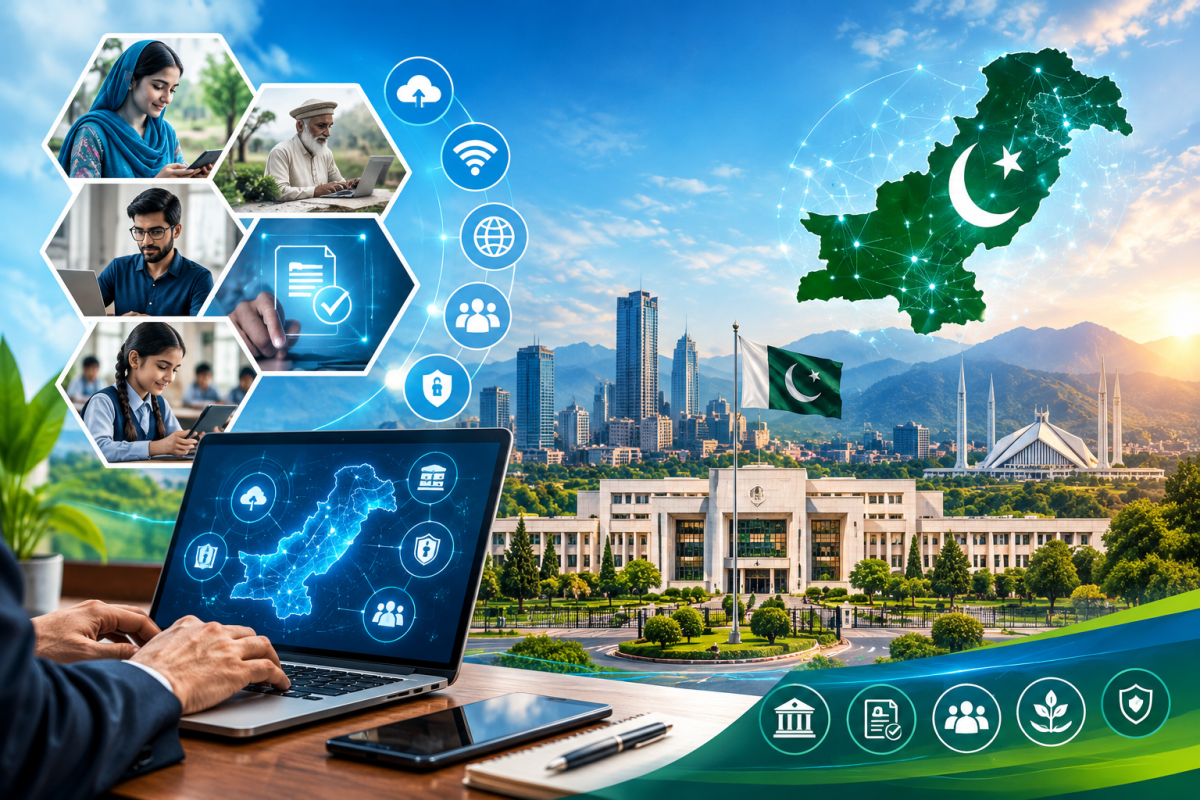
The twenty-first century has witnessed an unprecedented digital revolution that has transformed the way governments function, businesses operate, and citizens interact with public institutions. Across the globe, countries are embracing digital technologies to improve governance, increase transparency, reduce corruption, and enhance the quality of public services. Pakistan, a developing country with a population of over 259 million, has also embarked on an ambitious journey toward digital transformation. As technology becomes central to economic development, Pakistan is increasingly investing in digital infrastructure, e-governance, artificial intelligence (AI), cybersecurity, and digital public services to build a modern and efficient state.
Digital transformation is not merely about replacing paper files with computers. It is about redesigning governance through technology to make government services more accessible, efficient, transparent, and citizen-friendly. E-governance enables governments to deliver services online, reduce bureaucratic delays, improve accountability, and facilitate data-driven policymaking. For Pakistan, digital transformation is not only an opportunity but also a necessity to meet the demands of a rapidly growing population and an increasingly digital global economy.
Understanding Digital Transformation and E-Governance
Digital transformation refers to the integration of digital technologies into all aspects of governance, administration, and public service delivery. It fundamentally changes how governments operate and interact with citizens, businesses, and institutions.
E-governance involves the use of information and communication technologies (ICT) to provide government services electronically. It aims to improve administrative efficiency, transparency, accountability, and public participation.
The objectives of e-governance include:
- Faster delivery of public services
- Greater transparency and accountability
- Reduced corruption
- Improved public participation
- Better coordination among government departments
- Efficient utilization of public resources
Pakistan's Digital Landscape
Pakistan possesses enormous potential for digital growth. With a population exceeding 259 million, nearly two-thirds of whom are under the age of 30, the country has one of the youngest populations in the world. This demographic advantage provides a strong foundation for building a digital economy and adopting emerging technologies.
Pakistan's economy has also shown signs of recovery in recent years. According to the Pakistan Economic Survey 2025–26, the country's nominal GDP reached approximately Rs126.9 trillion, reflecting increasing economic activity and creating opportunities for technology-driven reforms.
Internet penetration has expanded rapidly over the last decade. Millions of Pakistanis now access government services, banking, education, healthcare, and commerce through smartphones and digital platforms. The expansion of 4G networks, fibre-optic infrastructure, and broadband services has significantly increased digital connectivity across urban centres, although rural areas still require further investment.
Evolution of E-Governance in Pakistan
Pakistan's journey toward digital governance began with the establishment of the Electronic Government Directorate and later the National Information Technology Board (NITB). Over time, several federal and provincial initiatives have modernized public administration.
The government has introduced numerous digital platforms for tax collection, passport applications, vehicle registration, land records, business registration, utility bill payments, and citizen complaint management.
One of the most significant milestones has been the formulation of a national digital strategy that focuses on creating an integrated digital ecosystem where government agencies can securely exchange information and provide seamless services to citizens.
Major Digital Initiatives
1. NADRA and Digital Identity
The National Database and Registration Authority (NADRA) is regarded as one of Pakistan's greatest technological achievements. Its biometric identity management system has revolutionized citizen identification.
Digital identity enables:
- Online verification
- Financial inclusion
- Digital banking
- Social welfare distribution
- Passport and visa processing
NADRA's database forms the backbone of numerous digital public services.
2. Online Government Services
Pakistan has digitized several government services, including:
- Income tax filing
- Passport applications
- Driving licence renewal
- Land record verification
- Company registration
- Pension management
- Utility bill payments
These services have reduced processing time while minimizing unnecessary visits to government offices.
3. Digital Payments
Pakistan is rapidly moving toward a cashless economy.
The introduction of digital banking, mobile wallets, QR-code payments, and instant payment systems has transformed financial transactions.
Digital payment systems provide:
- Faster transactions
- Reduced financial fraud
- Better tax documentation
- Greater financial inclusion
4. Artificial Intelligence in Governance
Artificial Intelligence is becoming an important component of Pakistan's digital transformation strategy.
AI has the potential to improve:
- Healthcare diagnosis
- Disaster management
- Traffic control
- Agricultural productivity
- Tax administration
- Public service delivery
AI-powered data analysis can help governments make evidence-based decisions and predict future policy challenges.
Provincial Digital Reforms
Punjab, Sindh, Khyber Pakhtunkhwa, and Balochistan have introduced various digital governance initiatives.
Examples include:
- Digital land records
- Online police complaint systems
- E-procurement
- Smart city projects
- Digital health records
- School management information systems
These initiatives have improved efficiency while reducing opportunities for corruption.
Benefits of Digital Transformation
Improved Transparency
Digital systems reduce human discretion and minimize opportunities for bribery and corruption.
Better Public Service Delivery
Citizens can access services online without lengthy queues or paperwork.
Economic Growth
Technology supports entrepreneurship, e-commerce, freelancing, software exports, and innovation.
Financial Inclusion
Millions of previously unbanked citizens can now access financial services through mobile banking.
Better Disaster Response
Digital mapping, satellite data, and AI enable authorities to respond more effectively to floods, earthquakes, and other emergencies.
Data-Driven Decision Making
Governments can use real-time data to improve planning and resource allocation.
Challenges Facing Pakistan
Despite impressive progress, several obstacles remain.
Digital Divide
Many rural communities still lack reliable internet access and digital infrastructure.
Digital Literacy
A significant portion of the population lacks the skills required to use digital technologies effectively.
Cybersecurity
Increasing digitization also increases the risk of cyberattacks, online fraud, and data breaches.
Institutional Resistance
Some government departments continue to rely on outdated manual systems.
Infrastructure Gaps
Reliable electricity and high-speed internet remain unavailable in certain remote regions.
The Role of the Private Sector
Pakistan's technology industry has emerged as one of the country's fastest-growing sectors.
Technology companies contribute through:
- Software development
- Artificial intelligence
- Cloud computing
- Fintech
- E-commerce
- Cybersecurity solutions
Public-private partnerships will be essential for accelerating digital transformation.
Recommendations
To fully realize the benefits of digital transformation, Pakistan should:
- Expand broadband and fibre-optic networks nationwide.
- Invest in digital literacy and STEM education.
- Strengthen cybersecurity laws and data protection frameworks.
- Promote artificial intelligence research and innovation.
- Integrate all government services into a unified digital platform.
- Encourage cashless transactions and digital financial services.
- Foster collaboration between government, academia, and the private sector.
- Increase investment in rural digital infrastructure.
Conclusion
Digital transformation and e-governance have the potential to reshape Pakistan's future by making governance more transparent, efficient, and inclusive. With a young population, expanding internet connectivity, and growing technological capabilities, Pakistan is well positioned to become a regional leader in digital innovation. However, achieving this vision requires sustained investment in infrastructure, cybersecurity, education, institutional reform, and digital inclusion.
A truly digital Pakistan is not defined merely by technology but by its ability to improve citizens' lives, strengthen democratic governance, create economic opportunities, and ensure that every citizen regardless of location or income can benefit from the digital age. If the current momentum is maintained, digital transformation can become one of the most powerful drivers of Pakistan's long-term economic growth, good governance, and sustainable development.

Mr. Obaid Ayub is a skilled professional with specialization in Finance and Operations. Demonstrating a proven track record, He possess a unique combination of skills tailored for the dynamic realms of finance, real estate, and marketing. He has successfully optimized business processes and implemented strategic financial initiatives, showcasing his ability to deliver tangible results. His expertise lies in developing and executing robust financial strategies aligned with organizational objectives, ensuring sustainable growth and profitability. He possess significant expertise in budgeting, forecasting, and financial analysis, contributing to the facilitation of well-informed decision-making.
Obaid Ayub
Director Operations House Of Elaan