




Climate Change and Food Security in Pakistan (2026): Impacts, Challenges, and Sustainable Solutions
Introduction
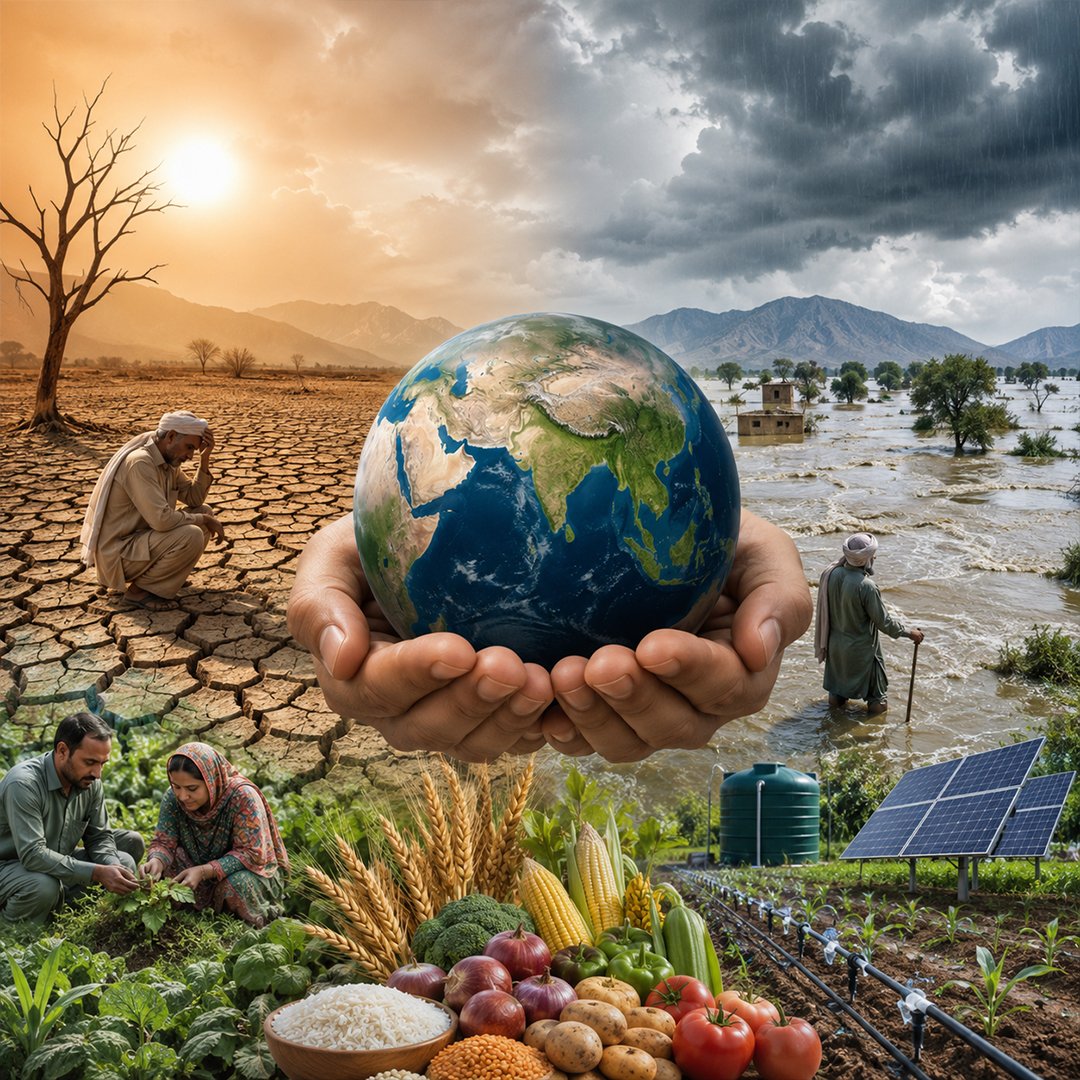
Climate change and food security in Pakistan have become deeply interconnected issues in 2026. Pakistan is currently facing severe environmental challenges, including rising temperatures, devastating floods, prolonged droughts, glacier melting, water scarcity, and unpredictable rainfall patterns. These climate-related events are directly affecting agriculture, food production, rural livelihoods, and the national economy. Since agriculture is one of the most important sectors in Pakistan, climate change poses a serious threat to the country’s long-term food security and sustainable development.
Pakistan contributes less than one percent to global greenhouse gas emissions, yet it ranks among the most climate-vulnerable countries in the world. Millions of people depend on agriculture for income and survival, making climate change not only an environmental issue but also a social, economic, and humanitarian crisis. In 2026, food insecurity continues to increase because of climate shocks, inflation, poverty, and declining agricultural productivity.
This article explores the relationship between climate change and food security in Pakistan, examines the major environmental threats affecting agriculture, discusses current food insecurity trends, and highlights sustainable solutions for climate resilience.
Understanding Climate Change and Food Security in Pakistan
Climate change refers to long-term changes in weather patterns caused mainly by human activities such as burning fossil fuels, deforestation, industrialization, and environmental pollution. These changes include increasing global temperatures, irregular rainfall, extreme weather events, heatwaves, floods, and droughts.
Food security means that all people have reliable physical and economic access to safe, nutritious, and sufficient food at all times. In Pakistan, climate change is disrupting every dimension of food security, including food availability, food access, food utilization, and food stability.
Agriculture remains the backbone of Pakistan’s economy. According to recent economic data from 2026, agriculture contributes around 22 percent to the country’s GDP and employs approximately 37 percent of the labor force. Major crops such as wheat, rice, cotton, sugarcane, and maize depend heavily on stable weather conditions and sufficient water supplies. However, climate variability is reducing crop yields and increasing food production risks across the country.
Impact of Climate Change on Agriculture in Pakistan
Rising Temperatures and Heatwaves
One of the most dangerous effects of climate change in Pakistan is the increase in average temperatures and frequent heatwaves. During recent years, several cities in Pakistan recorded temperatures above 50°C, creating serious challenges for agricultural production.
Extreme heat negatively affects crop growth by reducing soil moisture, increasing evaporation rates, and damaging plant development. Wheat production, which is critical for Pakistan’s food supply, is highly vulnerable to rising temperatures. Heat stress during the grain-filling stage significantly reduces wheat yields and affects food availability.
Heatwaves also impact livestock production. Animals exposed to high temperatures suffer from dehydration, disease, reduced milk production, and higher mortality rates. As a result, rural farmers experience economic losses and reduced food supplies.
Floods and Destruction of Agricultural Land
Floods have become one of the most destructive climate disasters in Pakistan. Following the catastrophic floods of 2022, heavy monsoon rainfall during 2024 and 2025 continued to damage agricultural lands, irrigation systems, roads, and rural infrastructure.
Millions of acres of farmland have been destroyed by floods in recent years. Floodwater damages standing crops, washes away fertile soil, destroys food storage systems, and kills livestock. Crops such as rice, cotton, and sugarcane are especially vulnerable to excessive rainfall and waterlogging.
Flood-related agricultural losses increase food shortages and raise market prices for essential commodities. Poor households suffer the most because they lack financial resources to recover from climate disasters.
Water Scarcity and Irrigation Problems
Water scarcity has emerged as a major threat to food security in Pakistan. The country relies heavily on the Indus River system and glacier-fed water resources for irrigation. However, climate change is accelerating glacier melting and disrupting rainfall patterns, creating uncertainty in water availability.
Pakistan is rapidly approaching water stress conditions. Per capita water availability has declined significantly over the past few decades due to population growth, inefficient irrigation systems, and climate-related changes in water resources.
Agriculture consumes nearly 90 percent of Pakistan’s freshwater supply. Traditional irrigation methods waste large amounts of water, while groundwater depletion continues to increase in agricultural regions. Provinces such as Sindh and Balochistan are particularly vulnerable to drought and water shortages.
Without effective water management policies, Pakistan may face severe agricultural decline and food insecurity in the coming decades.
Climate Change and Food Insecurity in Pakistan
Increasing Hunger and Malnutrition
Climate change is contributing to rising levels of hunger and malnutrition in Pakistan. Floods, droughts, inflation, and declining agricultural productivity have reduced food access for millions of people.
According to recent food security reports from 2026, millions of Pakistanis are facing acute food insecurity, particularly in rural and disaster-affected areas. Families struggling with poverty often reduce meal quality and quantity due to rising food prices.
Child malnutrition remains a major concern in Pakistan. Around 40 percent of children suffer from stunted growth caused by chronic undernutrition. Many children and women also suffer from micronutrient deficiencies, including iron and vitamin deficiencies, which negatively affect health and development.
Rising Food Prices and Economic Pressure
Climate change contributes to food inflation by reducing agricultural production and disrupting supply chains. Floods and droughts damage crops, while transportation disruptions increase market costs.
In 2026, the prices of wheat flour, vegetables, fruits, and cooking oil remain unstable due to environmental and economic pressures. Poor households spend a large portion of their income on food, making them highly vulnerable to food insecurity.
Food inflation also affects dietary diversity. Many families shift toward cheaper and less nutritious food options, increasing health risks and malnutrition levels.
Vulnerable Communities and Rural Livelihoods
Small Farmers and Climate Vulnerability
Small-scale farmers are among the most vulnerable groups affected by climate change in Pakistan. Most farmers have limited access to financial resources, modern technology, agricultural insurance, and climate-resilient farming methods.
Crop failure caused by floods, droughts, or heatwaves often forces farmers into debt and poverty. Many rural households lose their primary source of income when agricultural productivity declines.
Climate-induced agricultural stress also contributes to rural-to-urban migration, increasing pressure on urban infrastructure and employment systems.
Women and Food Security Challenges
Women play an essential role in agriculture and household food management in Pakistan, yet they face greater climate-related vulnerabilities. Many women have limited access to land ownership, financial services, education, and agricultural support systems.
During climate disasters, women often experience increased unpaid labor burdens, food insecurity, and health risks. Improving women’s participation in climate adaptation and agricultural decision-making is critical for strengthening food security.
Government Policies and Climate Adaptation Strategies
The Government of Pakistan has introduced several policies and initiatives to address climate change and food security challenges. National climate policies focus on environmental sustainability, disaster management, reforestation, and climate adaptation.
Climate-smart agriculture programs are promoting drought-resistant seeds, efficient irrigation systems, sustainable land management, and improved farming technologies. Early warning systems for floods and droughts are also being strengthened to reduce disaster risks.
Pakistan is working with international organizations such as the FAO, UNDP, World Bank, and Asian Development Bank to improve climate resilience and agricultural sustainability. However, financial limitations, governance issues, and implementation challenges continue to slow progress.
Sustainable Solutions for Food Security in Pakistan
Promoting Climate-Smart Agriculture
Climate-smart agriculture is essential for protecting food security in Pakistan. Farmers need access to modern technologies, heat-resistant crops, efficient irrigation methods, and sustainable farming practices.
Improved agricultural research can help develop crop varieties that are more resistant to drought, floods, and rising temperatures.
Improving Water Management
Efficient water management is critical for future agricultural sustainability. Pakistan must modernize irrigation infrastructure, promote drip irrigation systems, reduce water wastage, and improve groundwater conservation.
Rainwater harvesting and water recycling systems can also help reduce pressure on freshwater resources.
Strengthening Disaster Preparedness
Pakistan needs stronger disaster preparedness systems to reduce the impacts of floods, droughts, and heatwaves. Early warning systems, emergency food reserves, and community-based adaptation programs can improve resilience in vulnerable areas.
Expanding Renewable Energy and Environmental Protection
Renewable energy solutions such as solar-powered irrigation can reduce environmental degradation and support sustainable agriculture. Reforestation and environmental conservation programs are also important for reducing climate risks and protecting ecosystems.
Future Outlook of Climate Change and Food Security in Pakistan
The future of food security in Pakistan depends on how effectively the country responds to climate change. Without immediate action, rising temperatures, water shortages, and environmental degradation could severely affect agricultural productivity and increase hunger and poverty.
However, Pakistan also has opportunities to build a climate-resilient agricultural system through sustainable development, technological innovation, improved governance, and international cooperation.
Long-term investments in climate adaptation, rural development, water conservation, and food systems are essential for protecting future generations from food insecurity.
Conclusion
Climate change has become one of the greatest threats to food security in Pakistan in 2026. Rising temperatures, floods, droughts, water scarcity, and environmental degradation are disrupting agriculture and threatening the livelihoods of millions of people.
The relationship between climate change and food security is multidimensional because environmental shocks directly affect food production, food prices, nutrition, and economic stability. Poor farmers, women, and rural communities remain the most vulnerable to these climate-related challenges.
To ensure sustainable food security, Pakistan must strengthen climate adaptation policies, modernize agriculture, improve water management, and invest in resilient food systems. Addressing climate change is no longer only an environmental necessity; it is essential for economic stability, social development, and national survival.

Mr. Obaid Ayub is a skilled professional with specialization in Finance and Operations. Demonstrating a proven track record, He possess a unique combination of skills tailored for the dynamic realms of finance, real estate, and marketing. He has successfully optimized business processes and implemented strategic financial initiatives, showcasing his ability to deliver tangible results. His expertise lies in developing and executing robust financial strategies aligned with organizational objectives, ensuring sustainable growth and profitability. He possess significant expertise in budgeting, forecasting, and financial analysis, contributing to the facilitation of well-informed decision-making.
Obaid Ayub
Director Operations House Of Elaan

Next Article